Selecting the wrong metal can cripple your production timeline. Procurement managers and fabricators often face unexpected press brake cracking. They might also deal with compromised structural integrity or blown material budgets due to poor material choices. We must carefully evaluate the core differences between the 3003 H14 VS 5052 H32 aluminum sheet. These rank as two of the most heavily utilized alloys in modern sheet metal fabrication. They separate primarily by baseline strength, bendability, and overall environmental resistance. This guide delivers a detailed technical and commercial evaluation. It helps engineers and buyers specify the exact alloy for their operational parameters. You will discover specific bend radius rules and corrosion ratings. We will show you how to optimize performance without overspending.
Key Takeaways
- Strength vs. Cost: 5052-H32 offers significantly higher tensile and yield strength than 3003-H14 but typically comes at a higher price point.
- Formability & Bending: 3003-H14 allows for tighter bend radii with lower risk of cracking, making it ideal for complex forming; 5052-H32 requires larger minimum bend radii.
- Corrosion Resistance: 5052-H32 is mandatory for marine environments and superior for anodizing, whereas 3003-H14 is sufficient for indoor, chemical, or painted applications.
- Weldability: Both offer excellent weldability, but 5052 provides stronger welded joints.
Defining the Application Frame: When to Evaluate 3003 vs 5052
Every fabrication project begins with a baseline material assessment. If you under-specify your material, you risk severe product failure in the field. Corrosion can eat through inadequate protective layers prematurely. On the other hand, if you over-specify, you burn through your budget unnecessarily. Over-specifying also increases tooling wear on your shop floor. You must find the precise middle ground.
Fabricators must accurately assess their current press brake capabilities before ordering material. Switching between these two alloys drastically alters springback. A softer metal behaves differently under pressure than a harder metal. When you switch materials, operators must adjust their required bend allowances. You cannot use the same tooling setup for both without expecting dimensional variations.
The winning choice depends on a specific matrix of requirements. You need to map out your load-bearing needs. You must also consider finishing needs and environmental exposure early in the design phase. A successful project matches the exact physical limits of the metal to the realities of its final environment.
Common Mistake: Treating both materials as interchangeable generic options during the initial quoting phase. Always specify the exact alloy and temper to ensure accurate cost forecasting.
Core Alloy & Temper Variances: The Engineering Baseline
Understanding the chemistry behind these metals helps predict their behavior on the shop floor. The primary alloying elements define how the material reacts to cutting, bending, and welding.
The 3003 alloy relies on manganese as its primary addition. This specific element enhances the baseline strength significantly over the commercially pure 1100 series. Despite this added strength, it maintains exceptionally high workability. You can form it easily without applying excessive tonnage.
The 5052 alloy uses magnesium instead. Magnesium significantly boosts the overall structural strength of the metal. It also provides excellent natural resistance to saltwater environments. This makes it a structurally superior choice for demanding outdoor applications.
Tempers dictate the final hardness and stability of the material. Here is how they differ:
- H14 (Half-Hard): Manufacturers strain-harden the material without applying any subsequent thermal treatment. It achieves a balanced half-hard state purely through mechanical rolling.
- H32 (Quarter-Hard, Stabilized): Producers strain-harden the metal first. They then stabilize it using a low-temperature heating process. This crucial thermal step prevents age-softening over time.
Mechanical Properties Comparison
We must look at standard verifiable ranges to understand their structural differences. The table below outlines the typical mechanical properties you can expect.
| Property |
3003-H14 |
5052-H32 |
| Yield Strength |
~21 ksi (145 MPa) |
~28 ksi (193 MPa) |
| Tensile Strength |
~22 ksi (150 MPa) |
~33 ksi (228 MPa) |
| Elongation (in 2 inches) |
8% - 16% |
12% - 18% |
| Brinell Hardness |
~40 |
~60 |
Formability and Fabrication Realities on the Shop Floor
Theoretical properties mean little if the metal fails during fabrication. Shop floor realities dictate which material you should ultimately select.
Press Brake Bending & Cracking Risks
When bending any aluminum sheet, cracking remains a constant threat. You must strictly adhere to minimum bend radius rules. For 3003-H14, the general rule ranges from 1T to 1.5T (where T equals material thickness). This tighter radius allows for intricate profiles. For 5052-H32, you must increase the radius to 1.5T to 2.5T.
Implementation Reality: Do not specify 5052-H32 for sharp 90-degree bends without proper inside radius tooling. Magnesium-alloyed metals easily suffer from micro-cracking along the outer bend line. If you force a sharp punch into this material, the outer surface will fracture. You will compromise the structural integrity immediately.
Machinability & Cutting
Machining characteristics vary noticeably between the two. The 5052 alloy machines slightly better due to its higher baseline hardness. It produces cleaner, more predictable chips when milled or turned. Conversely, the softer 3003 alloy can feel gummy under the cutter. It tends to stick to the cutting tool if you do not optimize your feed rates and coolant usage.
Weldability
Both alloys respond extremely well to TIG and MIG welding processes. Fabricators typically use standard 4043 or 5356 filler metals for both. However, 5052 provides a distinct advantage here. It retains better mechanical strength inside the Heat Affected Zone (HAZ). When you apply intense welding heat, the surrounding metal loses some of its temper. The 5052 alloy recovers better, ensuring a stronger joint overall.
Environmental Resistance & Surface Finishing
Exposure dictates lifespan. You must match the alloy to the atmosphere it will endure.
Marine & Saltwater Exposure
Evidence-oriented testing confirms a definitive winner for coastal applications. The 5052-H32 alloy stands as the undisputed industry standard for marine environments. Its magnesium content creates a highly resilient oxide layer. This prevents rapid oxidation when exposed to salt spray. In contrast, 3003-H14 will degrade noticeably faster under similar saline conditions. It will pit and corrode if left untreated near the ocean.
Anodizing & Coating Outcomes
Surface finishing serves both aesthetic and protective purposes. If your project requires clear anodizing, 5052 delivers superior visual outcomes. It provides a clearer, much more consistent finish. The 3003 alloy reacts differently to the anodizing bath. It often displays an undesirable yellowish or brownish tint. The inherent manganese content causes this discoloration.
However, visual aesthetics matter less if you plan to cover the metal. If the final product requires powder-coating or heavy industrial painting, 3003-H14 becomes highly attractive. It serves as the more cost-effective choice. You completely avoid the need for premium aesthetic anodizing. The paint adheres beautifully to a properly prepped 3003 surface.
Cost Efficiency, Supply Chain & Scalability
Material procurement goes beyond pure engineering specs. You must factor in market pricing and supply chain reliability to scale production successfully.
Material Cost per Pound
General market pricing favors the simpler alloy. The 3003 material generally operates as a commodity-grade sheet. It remains highly economical for high-volume runs. The 5052 alloy naturally commands a market premium. The addition of expensive magnesium elements drives the price up. Furthermore, the specialized thermal stabilization process required for the H32 temper adds manufacturing time and cost.
Weight-to-Strength ROI
Engineers often employ a strategic decision framework to offset this price difference. Because 5052-H32 possesses significantly higher yield strength, you can sometimes down-gauge your design. This means you can specify a thinner sheet to achieve the same structural rigidity. Using a thinner metal reduces the overall weight of your assembly. This reduction in total pounds required can easily offset the higher per-pound premium of the 5052 alloy.
Market Availability
Both alloys sit readily available on warehouse shelves globally. They form the backbone of metal service centers. However, 3003-H14 often boasts slightly shorter lead times for custom dimensions. It dominates standard architectural supply chains. If you need non-standard widths or rapid coil slitting, 3003 suppliers can often respond faster.
Decision Matrix: Shortlisting Your Aluminum Sheet
To finalize your specification, review this quick decision framework. It categorizes the best use cases for each material.
| Application Requirement |
Recommended Alloy |
Reasoning |
| Sharp Bends & Deep Drawing |
3003-H14 |
Lower yield strength prevents cracking on tight radii. |
| Marine & Coastal Exposure |
5052-H32 |
Magnesium content provides exceptional saltwater resistance. |
| High Structural Rigidity |
5052-H32 |
Higher baseline tensile strength supports heavier loads. |
| Budget-Focused Painted Parts |
3003-H14 |
Commodity pricing keeps material expenses low. |
Choose 3003-H14 Aluminum Sheet if:
- The project involves intricate bending, metal spinning, or deep drawing processes.
- The application exists entirely indoors, such as HVAC ductwork, roofing components, or simple food handling trays.
- The project budget remains exceptionally tight, and structural load-bearing requirements are minimal.
Choose 5052-H32 Aluminum Sheet if:
- The final product will face harsh marine environments or severe outdoor weathering conditions.
- High structural strength and rigidity are absolutely mandatory for safety. Examples include fuel tanks, transportation vehicle panels, and rugged electronic enclosures.
- High-end, consistent cosmetic clear anodizing is required for consumer-facing aesthetics.
Next Steps for Buyers
We highly advise buyers to request Mill Test Reports (MTRs) from their suppliers. Do this before executing mass procurement contracts. An MTR verifies the exact chemical composition. It also confirms the specific mechanical properties of the current batch. This documentation guarantees you receive the precise temper and strength ratings your engineers calculated.
Conclusion
The debate surrounding these two alloys is strictly a matter of matching material capabilities to your exact project liabilities. You cannot guess. You must align the mechanical properties with your required bend radii and environmental exposures.
As a practical rule of thumb, rely on 3003 when you face complex forming operations and strict budget controls. Turn to 5052 when you require unyielding strength and protection against harsh, corrosive environments.
Call to Action: Do you need help finalizing your material selection? Contact our sales and engineering team today. Share your specific blueprints with us. We will run tooling-capability checks and provide highly accurate material quoting to keep your production running smoothly.
FAQ
Q: Can you visually tell the difference between 3003-H14 and 5052-H32?
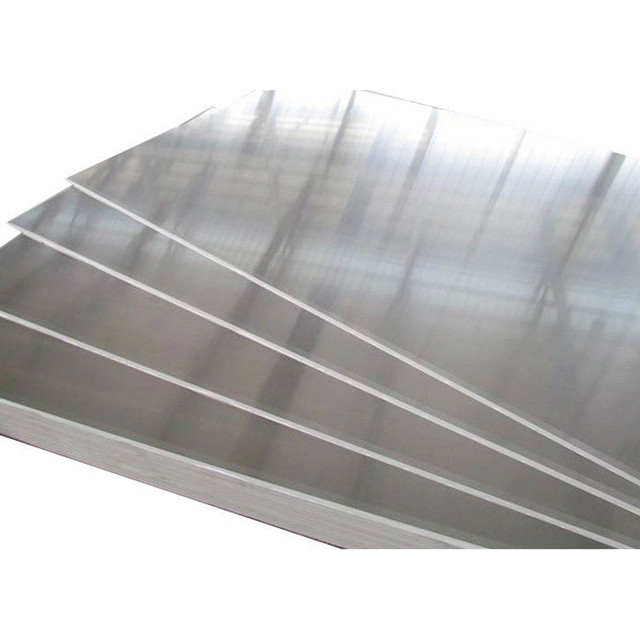
A: No. To the naked eye, they look completely identical. You cannot distinguish them by surface finish or color in their raw state. Reliance on proper labeling, supplier certification, and verifiable Mill Test Reports (MTRs) is mandatory to prevent shop floor mix-ups.
Q: Can I weld 3003 aluminum directly to 5052 aluminum?
A: Yes, they can be joined successfully. A common filler rod like 4043 is typically recommended for this specific task. It bridges the two different alloys effectively without inducing hot cracking during the cooling phase.
Q: Which aluminum sheet is better for laser cutting?
A: Both cut extremely well on modern fiber lasers. However, 5052-H32 often yields a slightly cleaner, dross-free edge due to its higher baseline hardness. The softer 3003-H14 material requires more careful assist gas and speed calibration to prevent unwanted edge melting.


