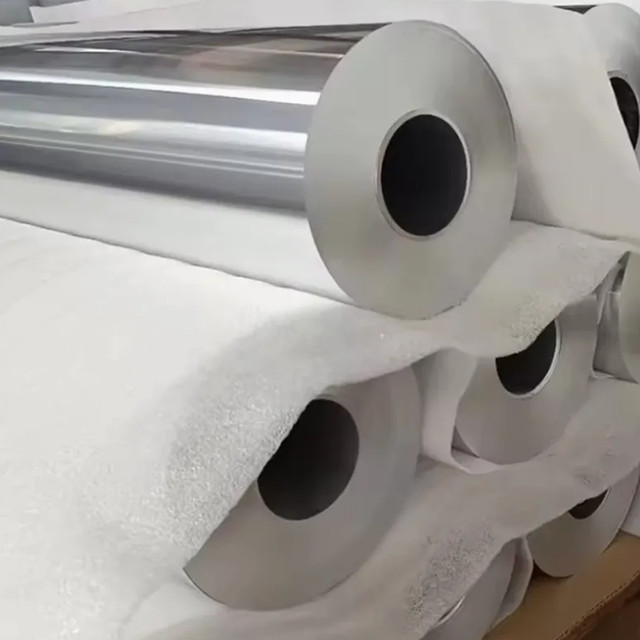
Production Line
The aluminum products can meet the requirements of clients from different countries


Designed for Heat Exchange — optimized conductivity for evaporator & condenser coils
Energy-Saving & Lightweight — reduces overall system weight / improves COP efficiency
Reliability Under Cycling — fatigue-resistant for long-term heat pump / automotive use
OEM-Ready Surface Prep — degreased & hydrophilic options for brazing & fin bonding
Wide Alloy Compatibility — from HVAC-grade 1050 to automotive-grade 5052
Stable Supply & QC — export-ready packaging + coil-to-coil consistency
Designed for Heat Exchange — optimized conductivity for evaporator & condenser coils
Energy-Saving & Lightweight — reduces overall system weight / improves COP efficiency
Reliability Under Cycling — fatigue-resistant for long-term heat pump / automotive use
OEM-Ready Surface Prep — degreased & hydrophilic options for brazing & fin bonding
Wide Alloy Compatibility — from HVAC-grade 1050 to automotive-grade 5052
Stable Supply & QC — export-ready packaging + coil-to-coil consistency
Specifying 3104 aluminum foil for honeycomb cores? Learn how to prevent node rupture, ensure perfect adhesive bonding, and cut scrap waste by 15%.
Master coated aluminum foil thickness specs. Learn how to calculate base vs. coating, prevent packaging failures, and optimize procurement yield.
3003 H14 vs 5052 H32 aluminum sheet: Compare strength, bending, and corrosion resistance to select the perfect alloy for your fabrication needs.