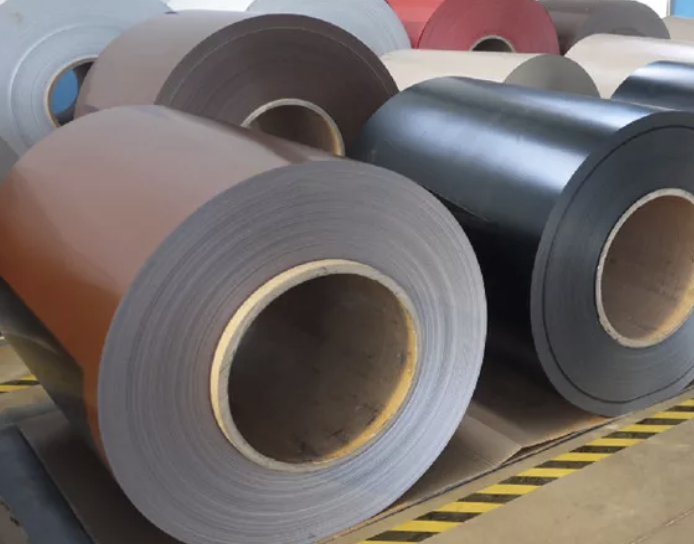
Choosing the right aluminum alloy can make or break your project. 1060 Aluminum is known for its high purity and conductivity. In this post, you’ll learn how 1060-H28 compares to 1100-H28 aluminum. We’ll explore their properties, uses, and which suits your needs best.
Detailed Comparison of 1060-H28 Aluminum vs. 1100-H28 Aluminum
When comparing 1060 aluminum and 1100 aluminum, especially in the H28 temper, understanding their differences helps in selecting the right material for your project. Both alloys are high-purity aluminum but vary slightly in composition and properties.
Chemical Composition Differences and Their Implications
1060-H28 Aluminum: Contains at least 99.6% aluminum, with minimal amounts of iron, silicon, and trace elements.
1100-H28 Aluminum: Has a slightly lower aluminum content (≥99%), with copper content ranging from 0.05% to 0.20%, and slightly higher iron and silicon levels.
The presence of copper in 1100 aluminum enhances its strength but slightly reduces electrical and thermal conductivity compared to 1060. The higher purity of 1060 aluminum results in better corrosion resistance and electrical conductivity.
Mechanical Properties Comparison: Strength and Durability
Property
1060-H28 Aluminum
1100-H28 Aluminum
Ultimate Tensile Strength (ksi)
18
24
Yield Strength (ksi)
14
20
Shear Strength (ksi)
10
14
Fatigue Strength (ksi)
5.4
7.7
1100-H28 aluminum offers higher tensile and yield strength, making it more suitable for medium-strength applications. In contrast, 1060-H28 has lower mechanical strength but excels in other areas.
Electrical Conductivity and Its Impact on Applications
Property
1060-H28 Aluminum
1100-H28 Aluminum
Electrical Conductivity (% IACS, equal volume)
62
59
Electrical Conductivity (% IACS, equal weight)
210
190
1060-H28 exhibits superior electrical conductivity, making it ideal for electrical and electronic components where efficient current flow is critical.
Thermal Conductivity and Heat Dissipation Performance
Property
1060-H28 Aluminum
1100-H28 Aluminum
Thermal Conductivity (BTU/h-ft-°F)
140
130
Thermal Diffusivity (mm²/s)
96
90
1060-H28 aluminum’s better thermal conductivity suits applications involving heat exchangers and heat sinks, where quick heat dissipation is essential.
Corrosion Resistance and Environmental Durability
Due to its higher purity and fewer alloying elements, 1060-H28 aluminum demonstrates excellent corrosion resistance, especially in chemical and marine environments. While 1100-H28 also offers good corrosion resistance, the presence of copper slightly reduces its durability in harsh conditions.
Cost Analysis and Economic Considerations
The base metal price for 1060-H28 is marginally higher than 1100-H28. However, the price difference is often minimal and should not be the sole deciding factor. Instead, focus on the performance requirements of your application.
Environmental Impact and Sustainability Factors
Both alloys share similar embodied energy and carbon footprints, with negligible differences in embodied water usage. Choosing either alloy aligns well with sustainability goals, especially when considering recycling and lifecycle impacts.
Note: When selecting between 1060-H28 and 1100-H28 aluminum, consider your application's strength, conductivity, and corrosion resistance needs rather than cost alone for optimal performance.
Applications Best Suited for 1060 Aluminum
When considering 1060 aluminum for your project, its unique properties make it ideal for specific applications. Its high purity and excellent electrical and thermal conductivity set it apart from other alloys, including 1100 aluminum.
Electrical and Electronic Components
1060 aluminum’s superior electrical conductivity (about 62% IACS at equal volume) makes it a prime choice for electrical applications. It’s commonly used in:
Electrical conductors and busbars
Capacitor foils
Electronic packaging and heat sinks
Its high conductivity ensures efficient current flow, reducing energy losses and improving overall device performance.
Heat Exchangers and Thermal Management
Thanks to its excellent thermal conductivity (around 140 BTU/h-ft-°F), 1060 aluminum is widely used in thermal management systems. Applications include:
Radiator fins
Air conditioning condensers
Heat exchangers
Its ability to dissipate heat quickly helps maintain optimal operating temperatures, enhancing system reliability.
Food and Chemical Containers
With outstanding corrosion resistance due to its high aluminum content (≥99.6%), 1060 aluminum suits environments that require chemical stability. It’s often found in:
Food packaging and containers
Chemical storage tanks
Beverage cans
The alloy’s resistance to corrosion ensures product safety and longevity, especially in acidic or marine environments.
Low Strength Structural Parts
While 1060 aluminum has lower mechanical strength compared to 1100, it performs well in structural parts where high strength is not critical. Examples include:
Decorative panels
Signage
Lightweight enclosures
Its excellent formability and corrosion resistance allow for easy fabrication and long-lasting use in such applications.
Tip: For projects requiring high electrical or thermal conductivity with excellent corrosion resistance, prioritize 1060 aluminum to maximize performance and durability.
Applications Best Suited for 1100 Aluminum
When deciding between 1060 aluminum and 1100 aluminum, understanding the best applications of 1100 aluminum helps you leverage its unique properties. The 1100 aluminum alloy, especially in the H28 temper, is widely recognized for its enhanced strength and good corrosion resistance, making it suitable for more demanding environments than 1060 aluminum.
Aerospace and Automotive Structural Components
1100 aluminum’s slightly higher copper content improves tensile and yield strength compared to 1060 aluminum. This makes it a preferred choice in aerospace and automotive industries for:
Exterior panels and body parts
Structural frames and supports
Cabin interiors and decorative trims
Its balance of strength and formability allows manufacturers to produce durable parts that withstand mechanical stress while maintaining lightweight benefits.
Industrial Equipment and Machinery Parts
In industrial settings, 1100 aluminum sheet and plate are commonly used for machinery components requiring moderate strength and corrosion resistance. Typical applications include:
Equipment housings and enclosures
Conveyor systems and structural frames
Chemical processing containers where moderate corrosion resistance suffices
The alloy’s good weldability and machinability facilitate complex fabrication processes, making it a versatile choice for industrial equipment.
Decorative and Architectural Uses
The excellent surface finish and corrosion resistance of 1100 aluminum make it ideal for decorative purposes. It’s frequently applied in:
Architectural panels and facades
Signage and nameplates
Interior design elements such as trims and moldings
Its ability to maintain appearance over time while resisting environmental wear adds aesthetic and functional value.
Cookware and Hardware Applications
1100 aluminum’s moderate strength and excellent corrosion resistance suit cookware and hardware manufacturing. Examples include:
Pots, pans, and baking trays
Kitchen utensils and hardware fittings
Decorative hardware like handles and knobs
Its good thermal conductivity supports efficient heat distribution in cookware, while ease of fabrication helps produce various hardware components.
Tip: For projects requiring a combination of moderate strength, good corrosion resistance, and excellent formability, consider 1100 aluminum sheet or plate to meet both structural and aesthetic needs efficiently.
Workability and Fabrication Considerations for 1060 and 1100 Aluminum
When working with 1060 aluminum and 1100 aluminum, especially in the H28 temper, understanding their workability and fabrication traits is key. Both alloys offer good formability and machinability, but their slight differences influence how they behave during manufacturing processes.
Formability and Deep Drawing Capabilities
Both 1060-H28 and 1100-H28 aluminum exhibit excellent formability, making them suitable for shaping into complex parts. However, 1060 aluminum generally has superior ductility due to its higher purity (≥99.6% aluminum), which means it can undergo deeper drawing and more extensive forming without cracking. This makes 1060 ideal for applications requiring intricate shapes, such as deep-drawn containers or heat exchangers.
In contrast, 1100 aluminum, with its slightly lower purity and copper content (0.05–0.20%), offers good but somewhat reduced formability. It is still suitable for many forming processes but may require more careful control during deep drawing to avoid work hardening or cracking.
Welding Characteristics and Challenges
Both alloys are known for good weldability, but the 1100 aluminum alloy tends to have better welding characteristics. The copper in 1100 aluminum enhances its weldability by improving fusion during the welding process, which is advantageous for fabricating structural components or assemblies.
1060 aluminum, being purer, can be more sensitive to welding heat input and may require precise control to prevent warping or reduced mechanical properties in the weld zone. Post-weld heat treatment or annealing might be necessary to maintain optimal performance.
Machining and Finishing Techniques
Machining of 1060 aluminum sheet vs 1100 is generally straightforward due to their softness compared to other aluminum alloys. Both alloys machine well, but 1100 aluminum can be slightly harder, resulting in longer tool life during cutting or milling.
Finishing processes such as anodizing, painting, or polishing are effective on both alloys. The H28 temper provides a medium hardness that supports good surface finish quality without compromising workability.
Impact of H28 Temper on Fabrication
The H28 temper indicates a strain-hardened and partially annealed condition, balancing strength and ductility. For both 1060 h28 vs 1100 h28 aluminum, this temper enhances strength compared to fully annealed (O temper) states while retaining enough formability for fabrication.
This temper improves resistance to deformation during handling and fabrication, reducing the risk of damage. However, it slightly reduces elongation, so deep drawing or stamping operations must account for this.
Tip: When fabricating parts requiring complex shapes and deep drawing, prioritize 1060-H28 aluminum for its superior ductility, but choose 1100-H28 aluminum when enhanced weldability and slightly higher strength are critical.
Performance in Real-World Conditions
When evaluating 1060 aluminum versus 1100 aluminum in real-world conditions, several performance factors come into play. These include fatigue strength, thermal shock resistance, corrosion resistance, and maintenance costs. Understanding these aspects helps ensure the right alloy is selected for your specific application.
Fatigue Strength and Longevity
Fatigue strength measures how well a material withstands repeated loading cycles without failure. The 1100-H28 aluminum typically exhibits higher fatigue strength (about 7.7 ksi) compared to 1060-H28 aluminum (approximately 5.4 ksi). This difference arises from the copper content in 1100 alloy, which provides enhanced resistance to crack initiation and propagation under cyclic stress.
As a result, 1100 aluminum is better suited for applications involving fluctuating loads or vibrations, such as automotive or aerospace structural parts. Meanwhile, 1060 aluminum, with its lower fatigue strength, is more appropriate for static or low-stress environments where longevity is less impacted by cyclic fatigue.
Thermal Shock Resistance
Thermal shock resistance indicates how well a metal tolerates rapid temperature changes without cracking. Both alloys perform well, but 1060-H28 aluminum has a slight edge due to its higher thermal diffusivity (~96 mm²/s vs. 90 mm²/s for 1100). This means 1060 aluminum can more quickly absorb and dissipate heat, reducing thermal stresses during sudden temperature fluctuations.
This property makes 1060 aluminum preferable in heat exchangers or electronic components exposed to rapid heating and cooling cycles. The 1100 alloy still performs adequately but may require design considerations to mitigate thermal shock effects in harsh thermal environments.
Resistance to Environmental Corrosion
Corrosion resistance is a critical factor, especially for outdoor or chemically aggressive environments. The 1060 aluminum, with its higher purity (≥99.6% aluminum), offers excellent corrosion resistance, particularly against marine and chemical exposure. Its minimal alloying elements reduce galvanic corrosion risks.
In contrast, 1100 aluminum contains copper (0.05–0.20%), which slightly lowers its corrosion resistance. While still good, 1100 aluminum may be more susceptible to pitting or crevice corrosion in acidic or saline conditions. Protective coatings or anodizing can improve corrosion performance for both alloys.
Maintenance and Lifecycle Costs
From a maintenance perspective, 1060 aluminum’s superior corrosion resistance often translates to lower upkeep and longer service life in corrosive environments. This can reduce total lifecycle costs despite a marginally higher initial material price.
On the other hand, 1100 aluminum’s higher strength may reduce the need for frequent replacements in mechanically demanding applications, potentially offsetting its slightly higher maintenance in corrosive settings.
Choosing between the two alloys involves balancing these factors against your project’s operating conditions and budget.
Tip: For applications exposed to cyclic stresses and vibrations, prioritize 1100-H28 aluminum for its superior fatigue strength and longevity, but select 1060-H28 aluminum when thermal shock resistance and corrosion durability are paramount.
How to Choose Between 1060-H28 and 1100-H28 Aluminum for Your Project
Selecting between 1060-H28 aluminum and 1100-H28 aluminum depends on balancing key factors like strength, conductivity, cost, and specific application requirements. Both alloys have their strengths, so understanding your project’s priorities is essential.
Assessing Strength vs. Conductivity Needs
Strength Requirements: If your project demands higher mechanical strength and durability, 1100-H28 aluminum is the better choice. Its copper content boosts tensile and yield strength, making it suitable for structural parts that endure stress or cyclic loads.
Conductivity Priorities: For applications where electrical or thermal conductivity is critical, such as electrical conductors or heat exchangers, 1060-H28 aluminum excels. Its higher purity results in superior conductivity, ensuring efficient current flow and heat dissipation.
Considering Cost vs. Performance Trade-offs
The material cost difference between 1060-H28 and 1100-H28 aluminum is generally minimal. Although 1060-H28 may have a slightly higher base metal price, the overall cost impact is often outweighed by performance benefits.
Evaluate the total lifecycle cost: 1060 aluminum’s excellent corrosion resistance can reduce maintenance expenses in harsh environments, while 1100 aluminum’s strength might lower replacement frequency in mechanically demanding applications.
Matching Alloy Properties to Application Requirements
Analyze the environmental conditions: For corrosive or marine environments, 1060-H28’s higher purity offers better resistance.
Consider fabrication processes: 1060-H28 provides better formability for deep drawing, whereas 1100-H28 offers improved weldability and slightly higher hardness.
Think about the end-use function: For decorative or architectural uses, 1100 aluminum’s surface finish and strength are advantageous. For electronic or thermal management parts, 1060 aluminum’s conductivity is preferable.
Consulting with Aluminum Suppliers and Experts
Discuss your project’s specifications with experienced aluminum suppliers or metallurgical experts. They can recommend the ideal alloy and temper based on your processing methods and performance goals.
Request samples and test data when possible to validate the suitability of 1060 aluminum sheet vs 1100 aluminum for your application.
Suppliers can also advise on availability, lead times, and custom tempering options to optimize your material choice.
Tip: Prioritize your project's primary performance needs—whether strength, conductivity, or corrosion resistance—and consult with trusted aluminum suppliers to select between 1060-H28 and 1100-H28 alloys for optimal results.
Conclusion
Choosing between 1060-H28 and 1100-H28 aluminum depends on strength, conductivity, and corrosion needs. 1060 offers superior conductivity and corrosion resistance, while 1100 provides higher strength and better weldability. Applications dictate the best choice, with 1060 favored for electrical and thermal uses, and 1100 suited for structural and decorative parts. Future trends highlight growing demand for pure aluminum alloys. Prioritizing material suitability over cost ensures optimal performance. Yuqi Metal delivers high-quality aluminum products that meet diverse project requirements efficiently.
FAQ
Q: What are the key differences between 1060 aluminum and 1100 aluminum in the H28 temper?
A: The main differences lie in composition and properties. 1060 aluminum has ≥99.6% purity, offering superior electrical and thermal conductivity and corrosion resistance. In contrast, 1100 aluminum contains 0.05–0.20% copper, enhancing strength and fatigue resistance but slightly reducing conductivity and corrosion resistance.
Q: How does 1060 aluminum sheet compare to 1100 aluminum sheet in mechanical properties?
A: 1100 aluminum sheet has higher tensile and yield strength due to copper content, making it better for structural applications. Meanwhile, 1060 aluminum sheet excels in conductivity and corrosion resistance but has lower mechanical strength.
Q: Why choose 1060 aluminum plate over 1100 aluminum plate for electrical applications?
A: 1060 aluminum plate offers superior electrical conductivity (about 62% IACS) compared to 1100, making it ideal for conductors, busbars, and electronic components requiring efficient current flow.
Q: What are the workability differences between 1060 h28 and 1100 h28 aluminum?
A: 1060 h28 aluminum has better formability and ductility for deep drawing, while 1100 h28 aluminum provides improved weldability and slightly higher strength, suited for applications needing moderate structural integrity.
Q: How do corrosion resistance and environmental durability compare between 1060 aluminum and 1100 aluminum?
A: 1060 aluminum’s higher purity ensures excellent corrosion resistance, especially in marine and chemical environments. 1100 aluminum is also corrosion resistant but slightly less so due to its copper content.
Q: Does 1060 aluminum cost more than 1100 aluminum?
A: 1060 aluminum typically has a marginally higher base metal price, but the difference is minimal. Choosing between them should focus on performance needs rather than cost alone.
Q: Which alloy is better for thermal management, 1060 aluminum or 1100 aluminum?
A: 1060 aluminum has higher thermal conductivity and diffusivity, making it preferable for heat exchangers and cooling applications compared to 1100 aluminum.
Table of Content list
+86-18086775436 info@yqalu.com No. 9, Huaxia Road, High-tech Zone, Xuzhou City, Jiangsu Province, China