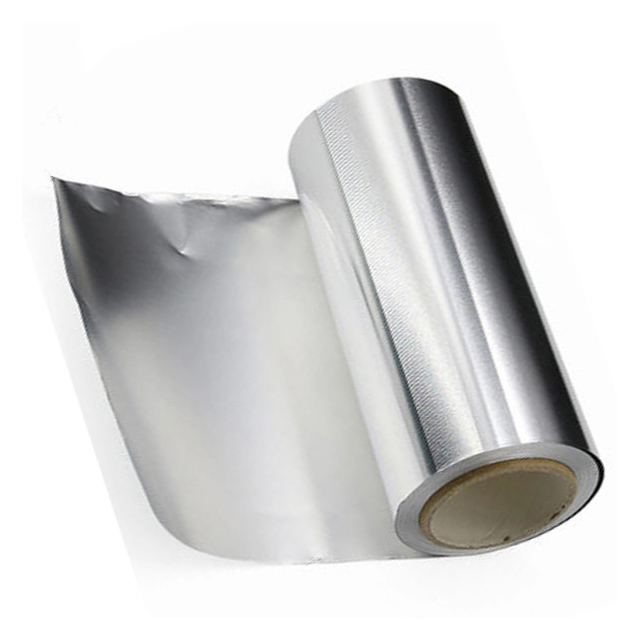
Modern automotive thermal management faces evolving and complex challenges. Shrinking engine bays, tighter EV battery packaging, and stricter lightweighting mandates demand highly innovative materials. Engineers require specific solutions balancing extreme heat reflectivity and minimal mass. We introduce Coated Aluminum Foil as the foundational component for modern automotive heat shields. It effectively bridges the gap between raw metal thermal performance and specialized environmental resistance. Without adequate protection, basic metals degrade rapidly in harsh vehicle underbodies.
This article provides a clear, unbiased framework for engineering and procurement teams. You will discover how to properly evaluate, specify, and source optimal materials for your production line. Our goal is to help you select precise specifications without over-specifying requirements or risking costly fabrication failures down the road. You will learn the exact evaluation criteria needed for successful implementation.
Key Takeaways
- Coated aluminum foil delivers up to 97% radiant heat reflectivity while specific coatings (e.g., epoxy, polyurethane) mitigate oxidation and chemical degradation in harsh under-hood environments.
- Decision-makers must evaluate foil based on three primary categories: structural vs. self-adhesive backing, and flat vs. embossed profiles.
- Successful implementation requires aligning alloy grade and thickness with the chosen manufacturing process (e.g., die-cutting, deep drawing) to avoid micro-cracking or delamination.
- Selecting the right supplier hinges on verifying automotive compliance (IATF 16949) and verifiable thermal testing data, rather than theoretical material specs.
The Engineering Mandate: Why Coated Aluminum Foil Excels in Heat Shields
Engineers consistently face severe material limitations when designing automotive under-hood components. Bare aluminum reflects radiant heat exceptionally well. However, it suffers from severe vulnerabilities in practical application. Sustained high temperatures cause rapid surface oxidation. Bare aluminum also acts as a highly active metal in galvanic corrosion scenarios. When it contacts a dissimilar metal like a steel chassis in the presence of road salt, the aluminum corrodes rapidly. Heavy traditional steel shields solve the corrosion issue but add unacceptable mass to the vehicle.
Applied surface treatments fundamentally change how this material behaves. Organic coatings like specialized epoxies and polyurethanes create a durable dielectric barrier. Inorganic treatments provide similar protective advantages. This barrier defends the substrate against aggressive road salts, dripping engine oil, and corrosive brake fluids. Furthermore, high-performance coatings withstand severe thermal cycling. They expand and contract alongside the metal substrate during rapid heating and cooling phases without flaking.
The return on investment for specifying Coated Aluminum Foil becomes evident across several key performance metrics. Consider these specific advantages:
- Weight Reduction: Replacing stamped steel with lightweight foil directly improves internal combustion engine (ICE) fuel efficiency. It also critically extends the driving range of electric vehicles (EVs).
- Spatial Efficiency: Modern foil composites conform easily to complex, irregular geometries. They wrap tightly around exhaust manifolds and turbochargers where space is minimal.
- Thermal Management: Maintaining lower engine bay temperatures protects sensitive electronic control units (ECUs) and wiring harnesses from premature heat-induced failure.
Solution Categories: Aligning Form Factor with Automotive Scenarios
Selecting the correct material profile is just as important as choosing the right alloy. Engineers must align the physical form factor of the foil with its intended automotive environment.
Flat vs. Embossed Coated Aluminum Foil
Flat and embossed profiles serve very different engineering purposes. You should specify flat foil when laminating the metal to other insulating substrates. Flat profiles provide maximum surface contact for adhesives. This makes them ideal for bonding to fiberglass mats or woven silica blankets. A uniform surface guarantees consistent lamination without trapped air pockets.
Conversely, embossed foil offers distinct physical and mechanical advantages for standalone applications. The embossing process presses a geometric pattern into the metal. This pattern significantly increases the total surface area. Greater surface area allows for faster, more efficient heat dissipation. Furthermore, the textured profile improves structural rigidity without increasing the actual material gauge. Embossed shields resist bending and warping better than flat sheets. This makes them ideal for standalone exhaust shielding where acoustic scattering is also beneficial.
Self-Adhesive vs. Mechanically Fastened Solutions
Assembly methods dictate the required backing type. The automotive industry shows a strong trend toward self-adhesive, peel-and-stick applications. These work beautifully for lower-temperature zones. Common applications include firewall insulation and EV battery enclosure linings. However, you must observe one critical assumption. The overall performance relies entirely on the high-temperature rating of the acrylic or silicone adhesive. If ambient temperatures exceed the adhesive rating, the shield will inevitably fail, regardless of the foil's quality.
Mechanical and structural solutions remain necessary for extreme high-temperature zones. Exhaust manifolds, catalytic converters, and turbochargers generate heat far beyond adhesive limits. These zones require thicker gauge foils. Manufacturers must stamp, hem, or die-cut these components. They then fasten them using metal rivets, bolts, or dedicated stand-offs to maintain a physical air gap.
Application Selection Chart
| Component Zone | Recommended Profile | Fastening Method | Primary Engineering Benefit |
| Firewall / Cabin Floor | Flat | Self-Adhesive | Acoustic damping and moderate ambient heat block. |
| EV Battery Enclosure | Flat / Light Emboss | Self-Adhesive | Space-saving thermal barrier; peel-and-stick assembly. |
| Exhaust Manifold | Deep Embossed | Mechanical | High structural rigidity; maximum radiant reflection. |
| Turbocharger Housing | Embossed Composite | Mechanical Clamp | Rapid heat dissipation; vibration resistance. |
![Automotive Coated Aluminum Foil Heat Shield Manufacturing]()
Core Evaluation Criteria for Specifying Coated Aluminum Foil
Evaluating material specifications requires looking past basic marketing claims. You must interrogate the exact alloy chemistry, physical dimensions, and chemical resilience of the surface treatment.
Alloy selection directly impacts both thermal performance and manufacturability. Engineers typically choose between the 1000 series and the 3000 or 8000 series aluminum. The 1000 series (like 1050 or 1100) represents commercially pure aluminum. It offers peak thermal conductivity and radiant reflectivity. However, it is structurally soft. Alternatively, the 3000 series (such as 3003) incorporates manganese. This addition drastically improves tensile strength and formability. The 8000 series behaves similarly, offering excellent deep-draw characteristics. If your part requires deep stamping, pure 1000 series aluminum may tear.
Thickness tolerances demand strict objective baselines. Industrial Coated Aluminum Foil typically ranges from 0.05mm to 0.3mm for automotive applications. The exact gauge depends heavily on the composite stack-up. A 0.05mm foil requires a fiberglass backing for support. A 0.3mm foil can often span small gaps independently. We strongly warn against under-specifying thickness simply to save costs. Excessively thin material compromises acoustic damping. It also loses rigidity and becomes highly susceptible to fatigue tearing under normal engine vibration.
Finally, you must define the testing standards for coating adhesion and chemical resistance. A heat shield is useless if its coating off-gasses toxic fumes or blisters at peak operating temperatures. Demand cross-hatch adhesion testing data according to ASTM D3359. This ensures the organic layer bonds permanently to the metal. Verify that the coating actively resists degradation when exposed to engine oil, coolant, and brake fluid.
Manufacturing Realities: Fabrication Risks and Mistakes to Avoid
Theoretical material specifications often clash with harsh manufacturing realities. Transitioning from engineering design to high-volume stamping requires careful risk management. Working with surface-treated metals introduces unique challenges that differ from handling bare steel or aluminum.
Die-cutting and stamping processes highlight these differences immediately. Coated foils require specific punch and die clearances. If tool clearance is too tight, the tooling shears the coating off the edges, creating exposed corrosion points. Rough tooling creates micro-burrs. These burrs act as stress concentrators, leading to fatigue failure. Deep-draw stamping presents another major risk. If the alloy temper is too hard, the material tears. If the bend radii are too tight, the protective coating will flake off the corners.
Handling and contamination represent significant "shop floor" realities. Even the highest-rated self-adhesive backing will fail if applied over contaminants. Minor oil spray, airborne dust, or assembly debris will compromise the bond. Furthermore, metal shavings left on the foil surface can introduce galvanic corrosion points, bypassing the protective coating entirely.
To mitigate these fabrication risks, we recommend following strict quality control protocols before mass production. Implement these specific steps during your pre-production phase:
- Conduct Pilot Tooling Runs: Run a limited batch specifically to test tool wear and tear. Coated surfaces can sometimes gum up cutting blades or cause material slippage.
- Verify Bend Tolerances: Inspect all stamped corners under magnification. Ensure the coating stretches without micro-cracking at maximum deformation points.
- Audit Assembly Cleanliness: Establish clean zones for applying self-adhesive shields. Mandate surface prep wiping on all receiving chassis points.
Shortlisting Logic: How to Evaluate Suppliers and Ensure Compliance
Sourcing reliable material requires stringent supplier evaluation. You cannot rely on generic commercial supply chains for critical automotive components. The selection logic must prioritize strict verification, industry standard alignment, and deep customization capabilities.
Always demand verification over marketing claims. Generic aluminum spec sheets provide zero value for automotive heat shields. You need localized, specific testing data. Request thermal reflection testing results conducted under established ASTM or ISO standards. Ask for accelerated aging test reports. A reliable supplier provides empirical evidence showing how their specific coating formulation handles 500 hours of salt spray exposure.
Automotive standard alignment is completely non-negotiable. Ensure your short-listed suppliers hold active IATF 16949 certification. This quality management standard proves they understand automotive supply chain rigor. Furthermore, the supplier must offer full material traceability. They should easily provide Production Part Approval Process (PPAP) documentation. If a supplier struggles to provide Level 3 PPAP data, they cannot support an OEM production line.
Evaluate their customization capabilities carefully. You do not just want an off-the-shelf roll of commercial foil. A premium supplier will tailor the coating thickness and formulation to your exact OEM requirements. They should adjust the alloy temper to match your stamping dies perfectly. They must also offer specific widths and slit tolerances to minimize your scrap rates during die-cutting.
Conclusion
Specifying materials for modern automotive thermal management requires exact precision. It is a careful balance of thermal physics, material formability, and application-specific backing technologies. Selecting the right surface treatment prevents catastrophic corrosion while maximizing radiant heat reflection. By understanding the distinct roles of alloy grades, embossing profiles, and adhesive limits, your engineering team can avoid costly design failures.
Take proactive next steps to ensure production success:
- Request customized material samples specifically tailored to your current fabrication process.
- Conduct localized die-cutting and stamping tests to verify coating adhesion under severe mechanical stress.
- Consult directly with materials engineers to match the precise alloy and gauge to your vehicle's exact thermal footprint.
- Audit your selected suppliers for strict IATF 16949 compliance and comprehensive PPAP documentation.
FAQ
Q: What is the maximum temperature rating for coated aluminum foil in automotive applications?
A: The maximum rating depends entirely on the composite elements. Pure aluminum melts around 660°C (1,220°F). However, organic coatings generally degrade between 200°C and 300°C. Self-adhesive backings usually fail earlier, often around 150°C to 200°C. Always specify limits based on the lowest-rated component in the stack-up.
Q: Why use embossed coated aluminum foil instead of flat foil for exhaust shields?
A: Embossing drastically increases the total surface area, allowing the shield to dissipate heat much faster. The textured geometric pattern also significantly increases structural rigidity. This allows the shield to span gaps without adding heavy material thickness. Furthermore, the dimpled surface helps scatter structural acoustics.
Q: Can self-adhesive coated foils replace mechanical heat shields in high-temperature zones?
A: Generally, no. You should not use self-adhesive foils for direct contact with exhaust manifolds or turbochargers. Adhesives melt or off-gas at extreme temperatures. However, they are excellent for blocking ambient radiant heat in lower-temperature zones, such as firewalls and cabin floors.
Q: What is the ideal thickness for die-cut automotive heat shields?
A: The ideal thickness depends on your specific composite stack-up. Industrial ranges typically span from 0.05mm to 0.3mm. A thin 0.05mm foil works perfectly when laminated to a thick fiberglass blanket. Standalone structural shields typically require 0.15mm to 0.3mm gauges to prevent tearing under engine vibration.