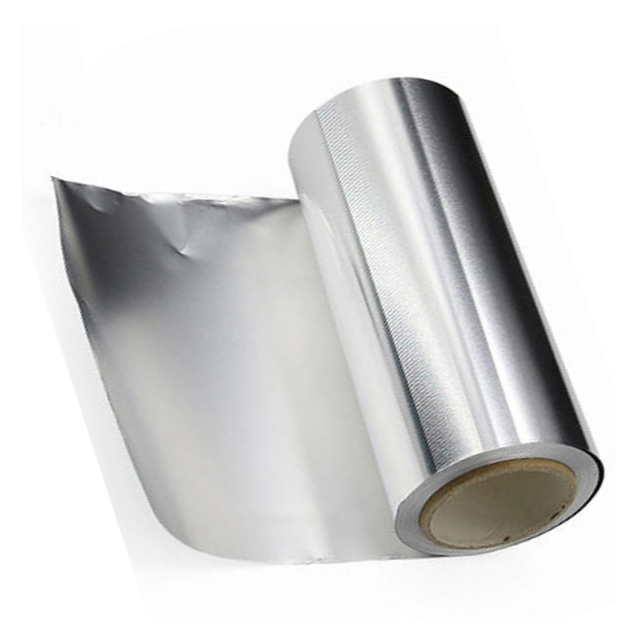
Specifying the incorrect thickness of coated aluminum foil sets the stage for disaster. Too thin, and you risk catastrophic packaging failures. These failures destroy product integrity and trigger recalls. Too thick, and you bloat material costs unnecessarily. This over-engineering also drastically reduces your yield-per-roll. Buyers face a unique complexity when procuring coated variations. You must distinguish accurately between the raw base metal thickness and the final coated thickness. Suppliers often measure the coating in GSM or microns. Misunderstanding this distinction leads to severe supply chain bottlenecks.
This guide provides a definitive, engineering-backed framework. You will learn how to evaluate, calculate, and specify exact foil thicknesses. High-stakes production lines require this level of precision. We will map out unit conversions, manufacturing tolerances, and application-specific risk profiles. By the end, you will possess the tools to balance mechanical integrity with optimal procurement economics.
Key Takeaways
- Total thickness equals base aluminum foil thickness plus the applied coating layer; failing to separate these in supplier RFQs causes production misalignments.
- Measurement units vary globally (microns, mils, gauge); standardizing your specification sheet prevents costly vendor misinterpretations.
- Thicker foil guarantees absolute zero moisture vapor transmission (WVTR) at 25 microns (1 mil), but many applications can safely down-gauge using high-performance barrier coatings.
- Verifying thickness requires mass-to-area density calculations, not just micrometer spot-checks, to account for industry-standard manufacturing tolerances.
The Economics of Foil Thickness: Cost vs. Yield
Thickness directly dictates roll length and roll weight. These two factors ultimately determine the material cost per finished unit. Procurement teams often struggle to balance material strength against overall yield. When you specify a thicker gauge, you purchase more metal per square meter. This reduces the total area you receive per kilogram.
An inverse relationship exists between thickness and yield. Yield represents the square meters of material you extract from one kilogram. Dropping your specification from 25 microns to 20 microns drastically increases your yield. You get more packaging impressions per roll. This reduces machine downtime for roll changeovers. It also lowers the unit cost for each sealed package.
Many engineers fall into the over-engineering trap. They default to thicker Aluminum Foil to ensure safety. This habit unnecessarily drains procurement budgets. Thicker metal does not always offer proportional operational benefits. Modern manufacturing lines rely on precise web tension control. If your machinery handles thinner materials without tearing, excess thickness wastes money.
Success requires achieving the lowest possible thickness. Industry experts call this practice "down-gauging." Your goal is a down-gauged specification maintaining 100% mechanical integrity. The material must survive machine web tension without snapping. It must also survive the sealing process without wrinkling. Achieving this balance requires precise mathematical modeling and rigorous vendor testing.
Navigating Units and Manufacturing Tolerances
Global measurement standards complicate international procurement. Different regions use different terminologies for thickness. Clarifying these conversions prevents severe manufacturing errors. European and Asian suppliers typically quote in Microns (µm). North American vendors often use Mils (thousandths of an inch). Legacy industries sometimes still refer to Gauge.
| Microns (µm) | Mils (thousandths of an inch) | Gauge | Common Application |
| 12.7 µm | 0.5 mil | 50 gauge | Standard food wraps |
| 25.4 µm | 1.0 mil | 100 gauge | Pharmaceutical blisters |
| 50.8 µm | 2.0 mil | 200 gauge | Industrial laminations |
You must establish realistic expectations for rolling mill variances. Perfect thickness consistency does not exist in metal rolling. Industry standard tolerances typically range from ±5% to ±8%. The exact tolerance depends entirely on the supplier's equipment precision. A 20-micron order with a ±5% tolerance will measure between 19 and 21 microns. You must account for this swing in your yield calculations.
Evaluating vendor capabilities requires direct questioning. Ask how they control gauge during the rolling process. Top-tier manufacturers utilize inline x-ray thickness gauges. These machines automatically adjust rolling pressure in real-time. Older mills rely on manual sampling and manual pressure adjustments. Choose suppliers utilizing automated x-ray feedback loops. This technology significantly narrows the delivered tolerance band.
Common Mistake: Never accept a quote lacking a defined tolerance range. Assuming a nominal thickness is exact will ruin your yield forecasting.
![Coated aluminum foil rolls showcasing thickness variations]()
Base Aluminum Foil vs. Final Coated Thickness
Buyers must understand the core distinction between metal and coating. Base metal thickness represents the raw aluminum output from the mill. Final coated thickness includes the dry film weight of applied chemicals. These chemicals might include heat seal lacquers, epoxies, or hydrophilic coatings. You cannot treat these two elements as one uniform material.
Micrometers fall short when evaluating coated products. A micrometer measures the total physical caliper of the sheet. It cannot measure the ratio of metal to coating. A 25-micron reading might mean 20 microns of metal and 5 microns of lacquer. Alternatively, it could mean 15 microns of metal and 10 microns of heavy epoxy. These two scenarios yield vastly different structural strengths.
The specific alloy interacts critically with the coating layer. Alloy 1235 offers excellent barrier properties but lower tensile strength. Alloy 8011 includes more iron and silicon, providing higher stiffness. A stiffer alloy combined with a rigid coating reduces the reliance on raw metal thickness. You can often down-gauge an 8011 specification further than a 1235 specification.
Best Practice: Always request specifications separated by layer. Demand the base Aluminum Foil thickness in microns. Demand the coating weight in Grams per Square Meter (GSM). This eliminates dangerous ambiguity.
Matching Thickness to Application Risk Profiles
Different industries carry vastly different risk profiles. Pharmaceutical blister packs represent a high-risk application. These push-through foils require a critical balance. They need sufficient burst strength to protect the drug. Yet, they must remain easy enough for patients to push through. Child-resistant compliance adds another layer of complexity. These foils typically require 20 to 30 microns of hard-temper base metal.
Food and beverage packaging focuses heavily on barrier protection. You must assess the minimum thickness required to eliminate pinholing risks. Pinholes allow oxygen and moisture to degrade the food. Uncoated foil achieves absolute zero pinholes around 25 microns. However, heavy lamination and quality coatings allow food packaging to down-gauge safely. Many flexible pouches utilize 12 to 15 microns effectively.
Industrial and HVAC applications prioritize different metrics entirely. Tensile strength and corrosion resistance outweigh yield efficiency here. Finstock for heat exchangers requires robust structural integrity. These applications demand heavy-gauge specifications. Thicknesses often exceed 50 microns. The coating must withstand severe condensation and rapid temperature shifts.
| Application Type | Typical Base Thickness | Primary Risk Factor | Coating Function |
| Pharmaceutical Blisters | 20 - 30 µm | Bursting / Child Safety | Heat seal to PVC/PVDC |
| Food Packaging Pouches | 12 - 15 µm | Pinholing / Oxidation | Barrier lamination |
| HVAC Finstock | 50 - 150 µm | Corrosion / Tearing | Hydrophilic shedding |
Your immediate next-step action involves compliance mapping. Map the specific end-use compliance requirements directly to the Technical Data Sheet (TDS). If the FDA requires a specific barrier level, trace that back to the combined coated thickness. Document this mapping explicitly in your quality manuals.
How to Verify and Calculate True Foil Thickness
Implementation reality often exposes flawed quality assurance methods. Relying on single-point caliper readings proves disastrous for rolled materials. Micrometers compress the soft metal slightly. They also capture microscopic surface peaks rather than the true average. When dealing with ±5% tolerances, mechanical micrometers lack the necessary reliability for acceptance testing.
Engineers utilize the density and weight method instead. This standardized calculation guarantees an accurate average thickness across a sample. The formula relies on the known density of aluminum, which is 2.7 g/cm³.
Standard Engineering Formula:
Thickness (mm) = Weight (grams) / [Area (cm²) × Density (2.7 g/cm³)]
To implement this successfully, your quality assurance team must follow exact receiving-inspection protocols. Outline these steps clearly to verify the supplier delivered the contracted gauge.
- Extract the Sample: Cut a precise 10 cm by 10 cm square from the middle of the roll. Avoid the edges where minor rolling distortions occur.
- Strip the Coating: Use an appropriate solvent to wash away the lacquer or epoxy. Dry the bare metal completely.
- Weigh the Base Metal: Place the bare sample on an analytical scale calibrated to four decimal places (0.0001g).
- Calculate the Gauge: Input the weight and area (100 cm²) into the density formula to find the exact base thickness.
- Weigh the Coating: Subtract the bare metal weight from the initial coated sample weight. Convert this difference into GSM to verify the coating application.
This rigorous protocol removes all guesswork. It prevents suppliers from hiding thin base metal beneath a heavy, cheap coating layer.
Vendor Shortlisting: How to Specify Thickness in Your RFQ
Defining the specification clearly protects your procurement process. An incomplete Request for Quotation (RFQ) invites terrible bids. Vendors will exploit vague language to quote cheaper, thinner materials. You must mandate specific data points on every single RFQ.
- Base Foil Thickness: State this explicitly in microns (e.g., 20 µm).
- Gauge Tolerance: Define the acceptable variance (e.g., ±5%). Reject quotes missing this parameter.
- Coating Weight: Specify the dry film weight in GSM (e.g., 3-5 GSM heat seal lacquer).
- Alloy Grade: Name the exact metallurgical series required (e.g., Alloy 8011).
- Temper: Specify the hardness required for machinability (e.g., Temper O for soft, H18 for hard).
Assessing trustworthiness requires vigilance during the bidding phase. Watch carefully for specific red flags. A vendor promising absolutely zero tolerance variations is lying. Physics dictates variance in metal rolling. Another red flag involves merging base and coated thickness into one physical measurement. If a vendor refuses to separate these numbers, disqualify them immediately.
Implement a trial roll strategy before full-scale deployment. Request a Minimum Order Quantity (MOQ) trial roll. Run this roll on your actual production lines. This tests machine machinability under real web tension. It also verifies seal integrity at your standard line speeds. Never approve a massive blanket order based purely on a paper TDS. Real-world machine dynamics always reveal hidden thickness issues.
Conclusion
Choosing the correct thickness requires precise mathematics and strict risk management. It is never an exercise in guesswork. You must separate base metal specifications from coating weights. You must also calculate yield based on strict, measurable tolerances rather than nominal claims.
- Standardize your RFQs: Always demand separate values for base metal microns and coating GSM.
- Verify through density: Discard mechanical micrometers for final QA. Use the mass-to-area density calculation for accurate receiving inspections.
- Map your risks: Match your alloy, temper, and gauge directly to your application's mechanical and barrier requirements.
- Test on the line: Validate web tension and seal integrity using physical trial rolls before committing to volume.
Partnering with a transparent manufacturer remains your safest path to operational efficiency. Demand technical clarity from your suppliers. Encourage your procurement team to contact supplier engineering teams directly. Ask them for custom yield calculations based on your exact machine limits. Request sample rolls today to begin testing specific alloy and thickness combinations on your floor.
FAQ
Q: What is the difference between measuring aluminum foil and tin foil thickness?
A: Modern industrial applications use aluminum, not legacy tin. Aluminum possesses a lower density (2.7 g/cm³) compared to tin (7.3 g/cm³). It also offers vastly different tensile strength characteristics. Because aluminum is stronger and lighter, baseline thickness requirements are much thinner than old tin foil specifications. You cannot use historical tin gauges for modern aluminum calculations.
Q: At what thickness does aluminum foil become 100% impermeable?
A: Industry consensus places absolute impermeability at 25 microns (approximately 1 mil). At this thickness, the statistical probability of microscopic pinholes drops to zero. Thinner gauges contain tiny pinholes created during the rolling process. However, combining thinner gauges with advanced barrier coatings often achieves effective impermeability for commercial packaging.
Q: How does the coating type affect the perceived thickness of the foil?
A: Primers, heat-seal lacquers, and hydrophilic coatings add functional volume and weight. They sit on top of the base metal. This changes physical micrometer readings significantly. A heavy epoxy coating makes the sheet feel much thicker. However, coatings add zero base metal tensile strength. Relying on perceived thickness leads to machine web breaks.
Q: Why did my calculated yield not match the physical roll length?
A: Several manufacturing realities cause this mismatch. Standard ±8% gauge tolerances mean your metal might be thicker than nominal, reducing total length per kilogram. Variations in coating application weight also skew the overall roll mass. Finally, incorrect density assumptions in your formula will ruin the mathematical yield projection.