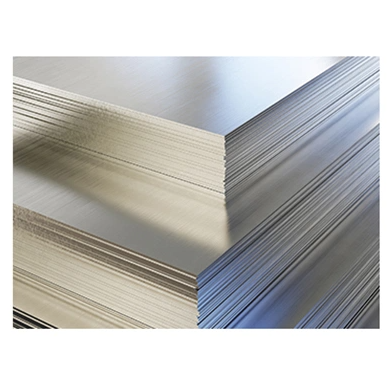
Ceiling fan manufacturers face a strict engineering trade-off every day. Fan blades must remain rigid enough to maintain aerodynamic pitch over years of continuous use. At the same time, they need to stay remarkably lightweight. This minimizes motor strain and helps manufacturers meet stringent energy-efficiency standards globally. Choosing the wrong metal or composite often disrupts this delicate balance entirely. Mild steel drastically increases motor load and inflates heavy shipping expenses. Plastics degrade quickly and warp as ambient room temperatures fluctuate. Soft-temper alloys easily sag under their own weight or stretch under centrifugal force. Fortunately, 1100 H18 Aluminum Sheet offers the perfect equilibrium for standard and architectural designs. By leveraging the baseline corrosion resistance of commercially pure aluminum alongside the maximized rigidity of a cold-worked temper, you achieve optimal yield rates. This comprehensive guide explores exactly how material choice dictates unit performance and explains why this specific grade dominates ceiling fan production worldwide.
Key Takeaways
- Optimal Rigidity-to-Weight Ratio: The H18 "full hard" temper prevents aerodynamic distortion and blade drooping, while remaining light enough to extend motor lifecycles and meet strict energy consumption regulations.
- Cost-Efficient Procurement: 1100 series aluminum sheet offers a lower raw material cost compared to higher-alloyed grades like 5052 or 3003, delivering superior ROI for large-scale production.
- Production Continuity: Excellent flatness and suitability for continuous stamping operations reduce tooling wear and increase throughput.
- Uncompromising Longevity: Commercially pure 1100 aluminum provides unmatched, inherent corrosion resistance, making it ideal for indoor, coastal, and damp-rated outdoor fans.
The Manufacturing Dilemma: Evaluating Material Impact on Motor Load and Blade Sag
Every ceiling fan design begins with a core engineering challenge. Manufacturers must balance structural limits against tight energy constraints. The chosen blade material directly dictates the required motor size. It also determines torque specifications and the overall unit energy rating. Regulatory agencies enforcing Energy Star compliance look closely at these exact metrics. Heavy blades require larger, power-hungry motors to spin them effectively. This adds bulk and inflates energy consumption limits.
Let us look closely at weight versus rigidity dynamics in manufacturing. Using overly heavy materials poses significant mechanical risks to the final product.
- Mild Steel: It causes premature bearing failure over time due to constant rotational stress. Steel also adds massive weight to the shipping box, hurting logistical margins.
- Stainless Steel: The sheer mass drastically increases operational inertia. This makes motor start-ups sluggish, loud, and electrically inefficient.
On the other hand, overly soft materials present their own operational flaws. They fail differently but equally disastrously.
- Plastics: They warp easily in warm, humid climates. This temperature sensitivity causes severe wobbling over the years.
- O-Temper Aluminum: Fully annealed metals stretch under centrifugal force. They quickly create noisy, unbalanced rotation and lose air-moving pitch.
This is exactly where the aluminum advantage becomes obvious. A specialized aluminum sheet serves as the baseline industry standard. It effectively bridges the gap between mass reduction and structural stability. Manufacturers rely on it to keep motors small, highly efficient, and exceptionally long-lasting. Engineers can push aerodynamic designs further without risking structural collapse.
![1100 H18 Aluminum Sheet]()
Decoding 1100 H18 Aluminum Sheet: Why the "Full Hard" Temper Is Critical
To understand its global dominance, we must examine the fundamental chemical composition of the 1100 series. The industry categorizes this grade as commercially pure aluminum. Standard specifications require it to contain a minimum of 99.0% pure aluminum content. By design, it lacks the heavy alloying elements found in aerospace grades. While this high purity limits absolute base strength compared to complex alloys, it provides crucial secondary benefits. It guarantees maximum, inherent corrosion resistance across diverse environments. It also delivers excellent thermal conductivity, helping dissipate ambient motor heat.
However, chemical purity alone does not hold an aerodynamic shape. Manufacturers need the mechanical reality of the H18 strain-hardened condition.
- The raw metal undergoes rigorous cold-rolling at the production mill.
- Heavy mechanical rollers compress the crystalline structure tightly.
- This extreme mechanical pressure brings the metal directly to a "full hard" state.
- The process artificially increases its ultimate tensile strength to roughly 165 MPa (24,000 psi).
- You achieve this robust strength entirely without utilizing expensive, time-consuming thermal heat treatments.
Connecting this industrial application to the real-world outcome is quite straightforward. The H18 hardness links directly to the blade's resistance to creep. Metallurgists define creep as the gradual deformation of material under sustained stress. Ceiling fans hang from ceilings for a decade or more. Gravity constantly pulls down on the horizontal blades. Furthermore, centrifugal forces pull outward during high-speed operation. The rigid H18 temper completely prevents this gravity-induced sagging. Your ceiling fan maintains its original, factory-set aerodynamic pitch across a 10+ year lifespan. This longevity reduces warranty claims and deeply protects your brand reputation.
1100 H18 vs. 3003 and 5052 Alloys: A Procurement and ROI Framework
Procurement teams constantly evaluate alternative alloys to maximize overall return on investment. The process requires a strict, objective evaluation framework. We must compare available materials based on yield strength. We also analyze raw material cost per metric ton. Finally, we factor in factory processing requirements and specific tooling impacts.
When comparing against the popular 5052 alloy, we must acknowledge a few mechanical facts. The 5052 grade possesses higher absolute structural strength. However, standard ceiling fan blades rarely require marine-grade load limits. The 5052 alloy contains magnesium, making it much harder and more abrasive during production. Therefore, the 1100 grade is significantly more cost-effective per ton. It is also notably easier on stamping dies, saving you substantial routine maintenance costs.
Next, consider the widely used 3003 alloy. It is alloyed with manganese and serves as a very close competitor in consumer goods. Yet, the 1100 H18 option often wins decisively on surface finish quality. It is structurally superior for chemical polishing. It also provides a better, smoother substrate for applying specialized cosmetic coatings. Furthermore, it consistently carries a marginally lower procurement cost on the global metal market.
We have developed a procurement shortlisting logic chart to guide your engineering decisions. Use this reference to streamline your material selection phase.
| Material Grade | Primary Characteristic | Best Ceiling Fan Use Case | Relative Cost Impact |
| 1100 H18 | Full hard, highly pure, maximum corrosion resistance | Standard stamped flat or gently curved aerodynamic blades | Highly Economical |
| 3003 H14 | Moderate strength, good workability, slightly grainier | Designs requiring moderate bending or complex forming steps | Moderate |
| 5052 H32 | High strength, marine-grade durability, abrasive to tooling | Heavy-duty industrial fans or high-stress environments | Premium |
Rule of thumb for buyers: If your blade design requires extreme deep-drawing, look elsewhere immediately. Full hard tempers will inevitably crack under aggressive deep draws. However, if your design utilizes a standard stamped aerodynamic blade, the 1100 H18 mathematically maximizes your production investment return.
Implementation Realities: Stamping, Coating, and Minimizing Tooling Wear
Manufacturers must address the stamping and formability constraints of the H18 temper completely transparently. Because it sits in a fully hard mechanical state, its maximum bend radius remains quite limited. It works perfectly for the gentle, sweeping curves required for modern fan blades. It also handles basic flat stamping operations exceptionally well.
Common Mistake: Do not use full hard tempers for complex designs requiring sharp 90-degree hems. Unless you use proper radius tooling and sophisticated relief cuts, tight bends will cause the metal grain to fracture entirely.
Despite this inherent structural hardness, this commercially pure metal is highly machinable. Processing it extends the operational life of punch-press dies considerably. Compared to processing mild steel, you will experience far less abrasive die wear. The pure aluminum acts almost as a self-lubricating substrate against hardened steel dies. This dynamic directly increases your daily factory throughput. It severely minimizes machine downtime required for die sharpening.
When setting up your stamping lines, ensure your feeding mechanisms handle hard-temper coils gently. The H18 material feeds rapidly but requires precise tension control. Over-tensioning the uncoiler can induce unwanted camber. Proper equipment calibration ensures perfectly flat blanks enter the stamping die. This guarantees the final aerodynamic curve matches your CAD models perfectly.
Furthermore, you must carefully consider surface treatment compatibility. Ceiling fans act as prominent interior design elements. The metal must look absolutely flawless. The 1100 series accepts electrostatic powder coating beautifully. It also takes architectural anodizing and standard liquid paint finishes exceptionally well. The inherent chemical stability of its pure surface ensures flawless, long-term adhesion. End-users will not experience cosmetic flaking or peeling. The finish remains perfectly intact even after years of continuous dusting, cleaning, and atmospheric exposure.
Navigating Supply Chain Specs: Thickness, Tolerances, and Quality Control
Dimensional accuracy dictates the ultimate performance of any high-speed rotating machinery. Strict thickness tolerances in your sheet metal ensure perfectly uniform blade weight. Uneven weight distribution quickly causes disruptive fan wobble. This wobble creates unwanted noise and eventually leads to catastrophic motor burn-out. Even a few grams of weight variance across a set of blades ruins the end-user experience.
Industry engineers typically specify certain dimensional ranges to guarantee operational stability. Typical specifications utilize thickness ranges strictly from 1.0mm to 2.0mm. The exact thickness depends heavily on the overall fan diameter. It also depends on the specific aerodynamic blade span. Larger fans sweeping massive volumes of air naturally require the thicker end of that spectrum to prevent fluttering.
Best Practices for Procurement: Procurement teams must always request official mill test certificates (MTCs). These formal documents verify the exact chemical and mechanical properties of the batch. They guarantee the H18 temper specifications are actually met by the manufacturing mill. Do not accept generic, copy-pasted certifications from secondary distributors. Demand batch-specific metallurgical test results. This practice allows you to maintain your own rigorous quality control standards. It prevents sub-standard metal from ever reaching your stamping presses.
Conclusion
Engineering teams must not view material selection as a mere cost-cutting exercise. It dictates product lifecycles and consumer safety. The right choice prevents costly downstream failures and ensures operational excellence. To summarize our final assessment:
- This specific pure aluminum grade stands as the most balanced, evidence-backed choice for standard ceiling fan blades.
- It optimizes factory production costs while guaranteeing absolute end-user reliability.
- Its engineered rigidity eliminates drooping, ensuring long-term aerodynamic efficiency.
- The alloy easily accepts diverse cosmetic surface finishes, streamlining final production steps.
For your next steps, we recommend that engineering and procurement teams request sample blanks. Run these samples directly through your own stamping dies. Conduct your own internal balance and weight testing protocols. Once validated, prompt your purchasing buyers to submit a formal Request for Quotation (RFQ). Base this request strictly on your specific thickness and width requirements to secure accurate bulk pricing.
FAQ
Q: Why can't I use 1100-O (soft temper) for fan blades?
A: The "O" temper represents a fully annealed, dead-soft state. It completely lacks the necessary yield strength to maintain an aerodynamic pitch angle. Under continuous rotational use and the constant pull of gravity, it will quickly bend and sag out of shape.
Q: Does 1100 H18 aluminum sheet require pre-treatment before powder coating?
A: Yes. While 1100 has a naturally stable oxide layer, a standard chromate or non-chromate conversion coating is highly recommended. This pre-treatment step creates an ideal micro-textured surface. It ensures maximum adhesion of the powder coat, preventing long-term peeling or flaking.
Q: Is 1100 H18 suitable for damp-rated or outdoor ceiling fans?
A: Absolutely. Because the 1100 grade is commercially pure aluminum lacking copper additions, it is exceptionally resistant to atmospheric corrosion. It effectively repels moisture-induced degradation, making it an ideal choice for outdoor patios, porches, or coastal environments.
Q: What is the cost difference between steel and 1100 H18 aluminum sheet for large production runs?
A: While steel often costs less per pound, aluminum's density is roughly 33% that of steel. Therefore, one metric ton of aluminum yields significantly more individual fan blades. Additionally, lighter blades allow you to utilize smaller, less expensive fan motors, creating a highly efficient manufacturing strategy overall.